Capital moves where conviction meets value. And in 2026, conviction is shifting east.
The European luxury real estate market is entering a period of recalibration. Established Western markets like London, Paris, and Geneva continue to command premium prices, yet increasingly, informed capital is flowing toward markets that offer structural growth alongside lifestyle returns. Montenegro sits at the centre of that conversation. Not because it is cheap, but because it represents a rare intersection of geopolitical neutrality, Adriatic beauty, favourable tax architecture, and an EU accession timeline that promises significant value appreciation.
At Barok Estates International, we advise clients across Europe and the Middle East on strategic real estate positioning. This analysis draws on current market data, institutional forecasts, and on-the-ground intelligence from our Montenegro and Southern European operations.
The State of European Luxury Real Estate in 2026
Europe’s luxury real estate market has shown remarkable resilience since the pandemic. According to Savills’ prime residential forecasts, property prices in prime European cities are expected to grow by an average of 1.6% in 2025 and into 2026, driven by continued demand and limited supply in core markets.
Yet the picture is far from uniform. Germany’s market is projected to grow by 4.4% through the end of 2026, according to Statista, with Munich and Berlin absorbing the bulk of high-end demand. France remains a perennial favourite, with the French real estate market valued at USD 493.6 million in 2023 and projected to grow to USD 598.9 million by 2030 at a compound annual growth rate of 2.8%. The UK residential market is anticipated to reach USD 476.46 billion by 2029, growing at 5.75% annually despite the lingering structural effects of Brexit.
These are mature, liquid markets. They offer stability. But they do not offer the asymmetric returns that define truly strategic acquisitions.
Where the Smart Money Is Going
The most significant shift in European luxury real estate over the past three years has been the institutional recognition of Southeast Europe, and Montenegro in particular, as a credible destination for premium capital.
This is not speculative enthusiasm. Montenegro’s luxury real estate market is underpinned by measurable structural drivers: an active EU accession process, a flat personal income tax rate that remains among the lowest in Europe, a cost of living that gives buyers significantly more for their capital than Western European alternatives, and a tourism sector growing at double-digit rates annually.
The country’s strategic position on the Adriatic, between Croatia (already EU) and Albania, places it in a corridor of accelerating development. The Bay of Kotor, Tivat, and the broader coastal belt have attracted a quality of development that would have been unthinkable a decade ago.
Montenegro’s Premium Real Estate Corridor: Tivat and Beyond
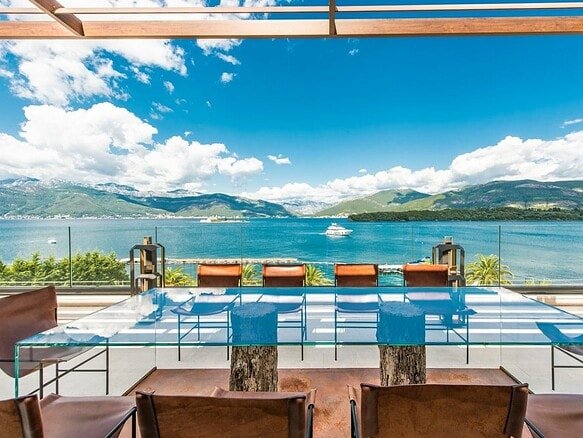
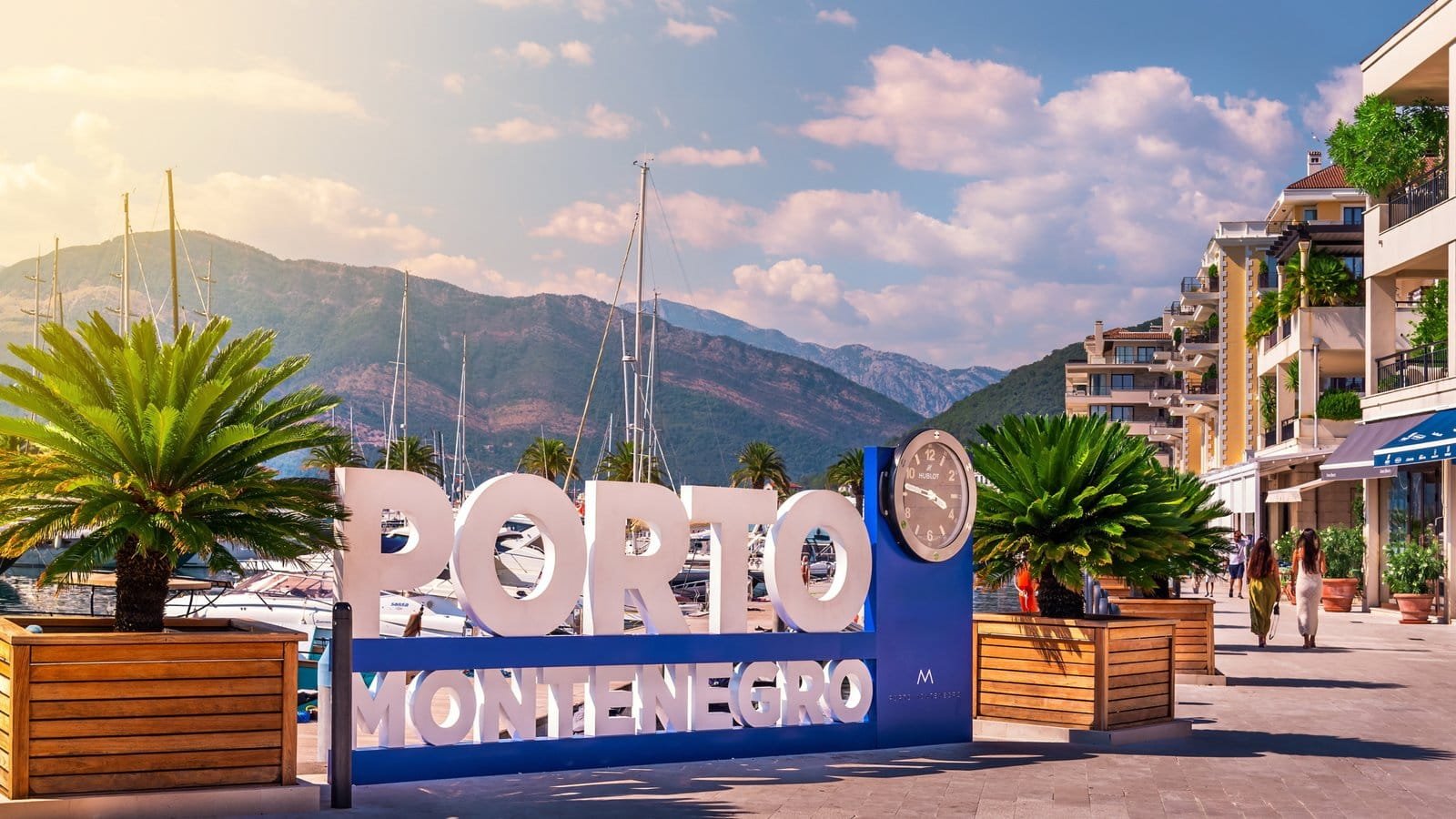
Tivat has become the operational centre of Montenegro’s luxury property market. The marina district, anchored by a world-class superyacht facility, now hosts branded residences, wellness-focused neighbourhoods, and international-standard hospitality. Boka Place, the newest neighbourhood on the waterfront, combines residential living with a Regent hotel, creating the kind of integrated lifestyle environment that UHNW buyers expect.
Development quality has reached a level where direct comparisons with established Mediterranean destinations are legitimate. Branded residences in Tivat now offer the same amenity profile as their counterparts in Dubai Marina or the French Riviera, at a fraction of the entry price. For capital preservation buyers, particularly those from the GCC, this represents an extraordinary value proposition.
The Bay of Kotor adds a different dimension entirely. UNESCO-protected, dramatically beautiful, and increasingly accessible via Tivat International Airport (with direct routes to major European hubs expanding each season), the Bay offers the kind of exclusivity that cannot be manufactured.
The Investment Case: Why Montenegro, Why Now
Timing in real estate is not about catching the bottom. It is about entering before the structural repricing.
Montenegro’s EU accession trajectory is the single most important value driver in Southeast European real estate right now. Every accession-track country in recent history has experienced a significant property value uplift in the years preceding and following EU membership. Montenegro is firmly on that path, with Chapter 33 (financial and budgetary provisions) among the most advanced negotiation chapters.
Consider the tax architecture. Montenegro offers:
- Personal income tax at a flat rate, among the lowest in Europe
- No inheritance tax for direct family members
- Corporate tax at 9%, one of the most competitive rates on the continent
- A residency-by-investment pathway that provides access to an EU candidate country
For international buyers, particularly those restructuring wealth across jurisdictions, Montenegro offers a combination of lifestyle, fiscal efficiency, and capital appreciation potential that few European markets can match.
Rental yields along Montenegro’s coast range from 4.5% to 7.1% for well-positioned properties, outperforming most prime European cities where yields have compressed below 3%. The tourism season is extending each year as new direct flights and the growing reputation of the Adriatic coast attract a more international visitor profile.
How Montenegro Compares to Established European Markets
Context matters. Here is how Montenegro’s premium segment compares to Europe’s most expensive markets:
London commands prime prices exceeding EUR 17,000 per square metre in Kensington and Mayfair, according to Knight Frank’s Wealth Report. It offers unparalleled liquidity and rule of law, but yields are compressed and entry costs are punishing for new buyers. Stamp duty alone on a GBP 5 million acquisition exceeds GBP 700,000.
Paris averages around EUR 15,000 per square metre in the 6th and 7th arrondissements. French wealth tax implications and complex purchase structures add friction for international buyers, despite the city’s enduring cultural appeal.
Geneva exceeds EUR 20,000 per square metre, according to UBS’s Real Estate Bubble Index, with limited foreign buyer access due to Switzerland’s Lex Koller restrictions.
Monaco reaches EUR 50,000 per square metre and beyond, per Savills data. It remains a unique proposition for tax optimisation, but the market is mature and yields are negligible.
Montenegro’s premium coastal segment offers waterfront branded residences and sea-view villas at a fraction of these prices, with a growth trajectory that none of these established markets can replicate. The spread between current pricing and post-EU-accession valuations represents what institutional analysts would call significant alpha.
The Broader European Luxury Real Estate Outlook for 2026
Several macro trends are shaping the European luxury real estate market this year.
Interest rate normalisation. The European Central Bank’s rate trajectory is creating a more favourable borrowing environment. For cash buyers, this means less competition from leveraged purchasers, preserving negotiation advantage. For those using financing, improved terms are making premium acquisitions more accessible.
Geopolitical repositioning. Conflict in the Middle East and shifting alliances have accelerated capital flows from the GCC into European safe havens. Southern Europe, Spain, and Montenegro have been direct beneficiaries of this trend. Capital that previously parked in Dubai or London is now diversifying into Mediterranean markets with stronger yield profiles.
Sustainability as a value driver. Green building certifications and energy efficiency are no longer nice-to-haves. They are pricing factors. New developments in Montenegro, particularly the latest generation of waterfront residences in Tivat, are being built to contemporary European sustainability standards, which positions them well for future regulatory requirements.
Remote work and lifestyle migration. The pandemic permanently altered where high-net-worth individuals choose to live. Montenegro’s combination of natural beauty, low cost of living relative to income potential, excellent connectivity (Tivat to London in under three hours), and a growing international community makes it one of the most compelling lifestyle-migration destinations in Europe.
Eastern Europe’s Emerging Luxury Markets
Montenegro is not alone in attracting premium capital to Eastern Europe, though it leads the luxury segment.
Croatia’s Adriatic coastline, particularly Dubrovnik and Split, has seen steady price appreciation driven by tourism and EU membership benefits. However, Croatia’s market is more mature and entry prices have already adjusted upward significantly.
The Czech Republic, especially Prague, has become a hub for luxury urban investment. Statista projects the Czech real estate market to reach USD 2.01 trillion in 2025, with a CAGR of 3.58% through 2028. Prague’s appeal is primarily urban and cultural, distinct from the coastal lifestyle proposition that Montenegro offers.
What sets Montenegro apart within this peer group is the convergence of coastal luxury, tax advantage, EU accession upside, and a development pipeline that includes internationally branded residences. No other Eastern European market offers all four simultaneously.
What This Means for Buyers and Investors
The European luxury real estate market in 2026 rewards strategic thinking over reactive purchasing. Buyers who focus solely on established markets will find stability but limited upside. Those who identify markets with structural catalysts, and position ahead of the curve, will capture the returns.
For UHNW buyers and family offices, the current window in Montenegro is particularly interesting. Prices are still accessible relative to comparable Mediterranean markets. The development pipeline is delivering world-class product. And the EU accession timeline provides a built-in repricing mechanism that is, for now, under-appreciated by the broader market.
At Barok Estates International, our advisory covers the full spectrum of European luxury markets, with particular depth in Montenegro and Southern Spain. We work with clients who think in decades, not quarters, and who understand that the best acquisitions are made when conviction meets value.
For those considering Montenegro, we would suggest starting with our detailed analyses:
- Montenegro Real Estate 2026: Premium Market Positioning
- Why UHNW Buyers Are Choosing Montenegro
- Is Montenegro Safe to Invest In Property?
- Montenegro Property Taxes: A Complete Guide
Or explore our current Montenegro portfolio, which includes waterfront residences, branded penthouses, historic stone villas, and contemporary sea-view homes across the Bay of Kotor and Tivat.
The European luxury real estate market is evolving. The question is not whether Montenegro belongs in the conversation. It is whether you position before or after the market fully recognises what is already underway.