
Montenegro’s citizenship-by-investment programme is closed. As of 2023, new applications are no longer accepted, and any service still advertising a Montenegrin passport through a qualifying investment should be treated with considerable caution.
That matters because “Montenegro citizenship by investment 2026” remains one of the more frequently searched queries in this market. Buyers who encounter articles written between 2019 and 2022 may be working from information that no longer applies. This piece sets out the current position clearly, so that capital-aware buyers can make informed decisions.
What the Programme Was
From approximately 2019 to 2022, Montenegro operated a structured citizenship-by-investment scheme. Qualifying applicants committed a minimum of €200,000 to a government development fund, alongside a direct property investment of either €250,000 (northern and central regions) or €450,000 (coastal areas and Podgorica). Processing was handled exclusively through accredited intermediaries, not directly through government channels.
The programme was conceived in part to attract capital ahead of anticipated EU accession. It was subsequently phased out as Montenegro advanced through the accession process, largely because the European Union required candidate states to wind down investment citizenship schemes before membership could proceed.
The Current Position in 2026: Residency, Not Citizenship
No standard citizenship-by-investment route exists in Montenegro in 2026. The current investment-linked pathway leads to residency, not a passport.
For non-EU buyers, Montenegro introduced a property-based temporary residence rule requiring a minimum tax-assessed value of €150,000. Critically, this is not the purchase price as stated in a sale contract; it is the official valuation issued by the Montenegro Tax Administration. Assessments in some coastal zones run below the agreed price, so verifying the official valuation before committing is essential.
Approved applicants receive a one-year temporary residence permit, renewable annually, provided they retain qualifying ownership, maintain the required tax-assessed value, demonstrate sufficient accessible funds (roughly €3,650 to €7,300 per year depending on municipality), and remain in Montenegro for the majority of the calendar year.
After five consecutive years of temporary residence, applicants may apply for permanent residence. Citizenship through naturalisation requires a further decade of permanent residence. The total journey from property purchase to Montenegrin citizenship is therefore a minimum 15-year process, not a fast-track route.
For a full breakdown of the €150,000 threshold, the application steps and the renewal process, our Montenegro residency by investment guide for 2026 covers each stage in detail.
Why the Investment Case Remains Compelling
The closure of the citizenship programme has not diminished the underlying case for Montenegrin property. For capital-positioned buyers, the residency pathway rewards genuine long-term commitment rather than transactional exposure.
Montenegro is an EU accession candidate at an advanced stage of the process. The European Commission has consistently identified it as the frontrunner among Western Balkan candidates, with accession formally targeted for 2028. Property positioned in the Montenegrin coastal market today carries the structural upside of a jurisdiction transitioning from candidate to full EU member status, a repricing event that is well understood by serious allocators.
Residency linked to property ownership also provides a practical base for buyers restructuring their wider European domicile exposure, particularly those considering tax residency in a low-rate jurisdiction outside the EU. Montenegro levies a flat 15 per cent capital gains tax on real estate for individuals, with a 9 per cent personal income tax rate and no inheritance tax on property passed to direct family. Our Montenegro property taxes guide covers the full fiscal framework.
Where Capital Is Currently Positioned
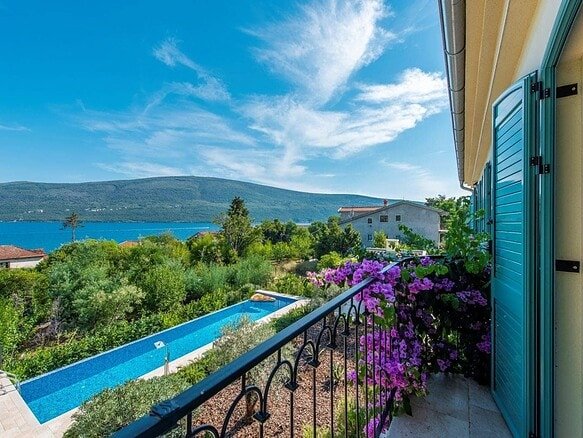
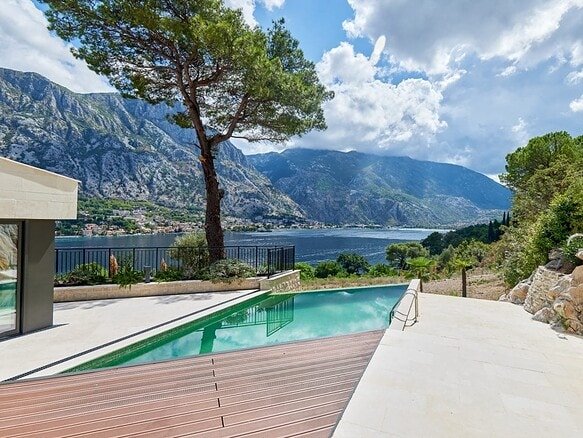
Coastal locations continue to attract the most active international buying. Tivat and Porto Montenegro represent the established prime corridor, with marina infrastructure and international liquidity that sets it apart from the wider Montenegrin market. Kotor Bay offers UNESCO-protected heritage, constrained supply and short-term rental yields that outperform most comparable Adriatic markets. Budva holds the broadest range of price points, from entry-level holiday apartments to significant waterfront assets.
For buyers weighing these locations directly, our comparative guide to Tivat, Lustica Bay and Budva provides a structured framework for allocating capital across the coast.
For broader context on where Montenegro sits in the current European investment cycle, our Montenegro real estate market overview for 2026 and the EU accession and property values analysis set out the macro position.
The Advisory Perspective
Buyers arriving at this article in search of a fast-track passport will find that Montenegro cannot deliver that in 2026. What it can offer is a stable and well-structured residency framework, a real estate market with credible appreciation potential, and a strategic entry point ahead of a structural repricing event that EU accession is expected to generate.
Barok Estates International advises international buyers across the Montenegrin coastal market, from established marina developments in Tivat to heritage acquisitions in the Bay of Kotor. Our approach is advisory rather than transactional: we work with buyers who are positioning capital thoughtfully, not buying fast.
For confidential availability and consultation: barokestates.com/contact