Contact
36+ years combined experience
A higher standard of real estate built on clarity, process, and results


Book a private consultation

What services does Barok Estates International offer?

Barok Estates International provides the full spectrum of premium property advisory services across Montenegro and Spain. Our core services are Property Acquisition, New Development access, Investment Advisory, Residency Advisory, Property Management, Property Sales, Rental Management and Development Consultancy. For clients requiring complete discretion and exclusive off-market access, our Private Office at barokmontenegro.com provides a dedicated private client service above our standard advisory offering.
How long does a Montenegro property acquisition typically take?
A Montenegro property acquisition typically completes within 6 to 14 weeks from the point of offer acceptance, depending on the complexity of the transaction and the buyer's legal and fiscal structuring requirements. Off-plan acquisitions follow a longer timeline of 12 to 36 months from reservation through to physical completion and key handover. Barok Estates manages the full process, including legal due diligence, notarial coordination and completion logistics, through a single point of contact.
How does the process work with Barok Estates?
Every engagement begins with a confidential consultation to understand the client's objectives, timeline and acquisition criteria. For buyers, this is followed by a curated property selection tailored to brief, independent market analysis and, where relevant, introductions to Montenegro's leading legal and fiscal advisors. For investors, we begin with a structured market intelligence briefing covering current pricing, yield data and the EU accession investment thesis. From that foundation, we manage every step through to legal completion and beyond.
Do you work with international buyers and investors?
International buyers and investors are the core of our business. Barok Estates International works with clients across Europe, the Gulf, the United Kingdom, and beyond, many of whom are acquiring their first Montenegro property or building a diversified Mediterranean portfolio. We manage the full cross-border acquisition process: legal due diligence in the Montenegro system, currency and payment structuring, title verification, notarial completion and post-acquisition management. For clients requiring residency advisory alongside an acquisition, we coordinate the complete legal and practical framework through a single point of contact.
Can foreigners buy property in Montenegro?
Yes. Foreigners can purchase apartments, houses, villas and most commercial real estate in Montenegro with full freehold ownership rights. There are no nationality restrictions, and buyers from any country hold the same legal standing as Montenegrin citizens for residential and commercial property. The primary limitations apply to agricultural land, forest land and properties within protected border or military zones, which require acquisition through a locally registered company. For the vast majority of residential and investment acquisitions, the process is open, legally secure and fully supported by Montenegro's established notarial system.
How do I buy property in Montenegro as a foreigner? What is the process?
The acquisition process follows a clear sequence. You begin by identifying a property through a licensed agent, followed by due diligence conducted by a Montenegrin lawyer who verifies ownership in the cadastre, checks for any liens or encumbrances and confirms building permits. A preliminary agreement is then signed with a reservation deposit, typically ten percent of the purchase price. Before final completion, foreign buyers must obtain a Montenegrin tax identification number from the Tax Administration. The final sales contract is executed before a public notary and must be in Montenegrin, with a certified court interpreter present if the buyer does not speak the language. Payment is made by bank transfer, mandatory for amounts above ten thousand euros. Transfer tax and legal fees are paid, and your lawyer registers your ownership in the land registry. The full process from offer acceptance to legal completion typically takes six to fourteen weeks.
Can Americans buy property in Montenegro?
Yes. American citizens and US nationals can purchase property in Montenegro on exactly the same terms as buyers from any other country. There are no bilateral restrictions, no US-specific limitations and no requirement for a visa or residency permit to complete a purchase. Americans consistently rank among the most active foreign buyer groups in Montenegro's prime coastal markets, particularly in Kotor, Tivat and Budva. The process is straightforward with the support of a qualified local attorney, and the transaction is fully notarised and legally recognised under Montenegrin law.
How much does property cost in Montenegro?
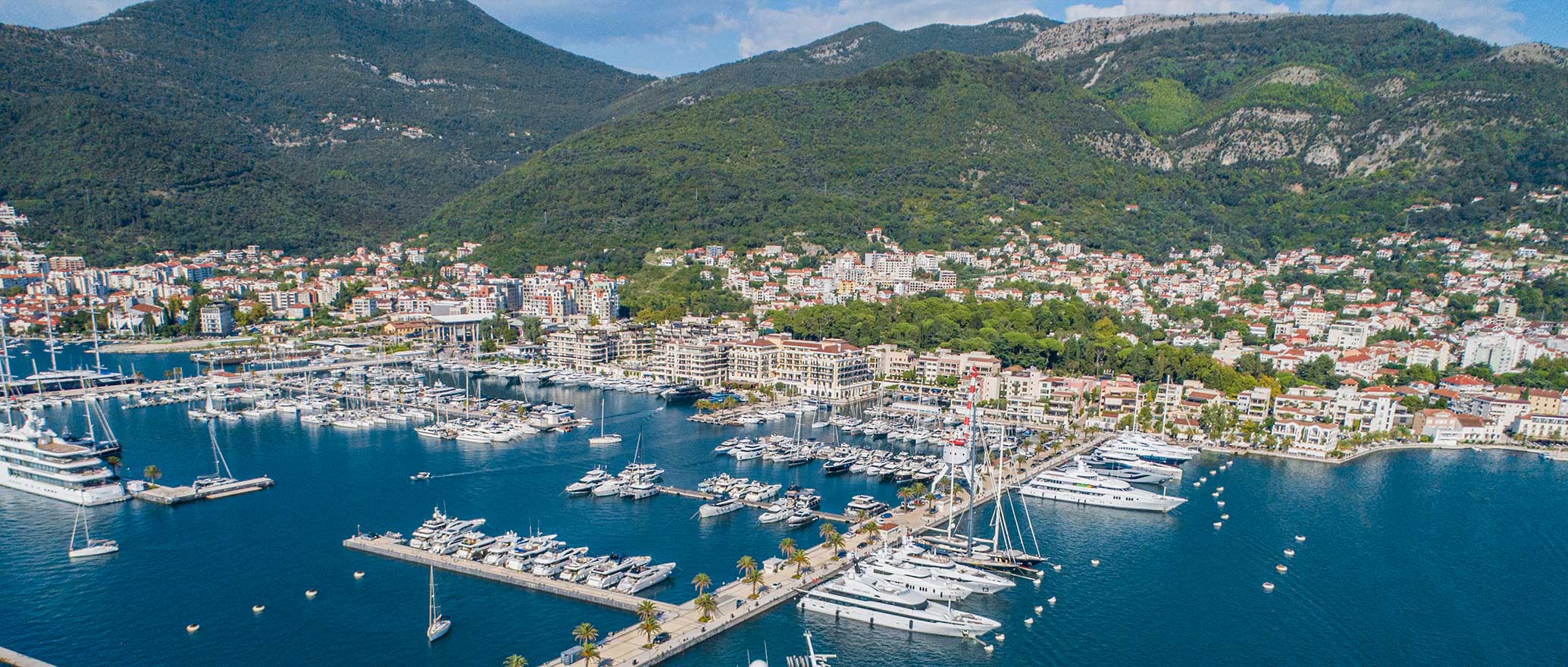
Prices vary significantly by location and property type. In Tivat, home to Porto Montenegro and the Adriatic's leading superyacht marina, apartments range from approximately three thousand to five thousand euros per square metre, with prime villas priced between five hundred thousand and two million euros. Kotor commands comparable values for its UNESCO-listed bay properties, typically two thousand three hundred to three thousand eight hundred euros per square metre for apartments and three hundred fifty thousand to one and a half million euros for villas. Budva, Montenegro's most established resort market, sits broadly in line with Kotor. Herceg Novi offers greater accessibility at one thousand eight hundred to two thousand eight hundred euros per square metre for apartments. In Podgorica, the capital, residential property averages one thousand three hundred to two thousand euros per square metre. Prime off-plan developments in all coastal locations carry significant premiums and are frequently sold before public launch.
What taxes and costs apply when buying property in Montenegro?
For resale properties, buyers pay a property transfer tax of three percent of the purchase price. New-build purchases from a developer are subject to VAT at twenty-one percent, which is typically included in the listed price. Notary fees are modest, generally around zero point one percent of the property value. Legal representation from a Montenegrin attorney is strongly advised and typically costs one to two percent of the transaction value. If a certified court interpreter is required at the notary, translation fees apply at a fixed hourly rate. In total, buyers should budget approximately three to five percent above the purchase price for all transaction costs on a resale acquisition. Annual property ownership tax is applied at a rate of zero point two five to one percent of the assessed value, depending on location and property type. Rental income is taxed at a flat rate of fifteen percent.
Can I get residency in Montenegro by buying property?
Yes, property ownership can support an application for temporary residency in Montenegro. As of November 2025, a significant regulatory change requires that the property used as the basis for a temporary residence application must be valued at a minimum of two hundred thousand euros. This threshold replaced the previous, less defined requirements and applies to all foreign nationals seeking temporary residence through property ownership. Owning property does not automatically confer residency; it is one qualifying element alongside standard documentation including proof of financial means, health insurance and a background check. Property ownership does not lead directly to citizenship. For buyers seeking both an investment and a residency solution, Barok Estates coordinates the complete legal and administrative process through specialist advisors.
Is it safe to buy property in Montenegro?
Montenegro's legal framework for real estate acquisition is well-established and mandates full notarial execution of all property sales contracts, which provides significant legal protection. The land registry system, the cadastre, is the authoritative record of ownership and encumbrances and can be independently verified prior to any transaction. The process is considered secure and investor-friendly when conducted with proper professional support. The most common risks arise from properties that lack full building legalisation or where land use permissions have not been formally registered. For this reason, engaging a qualified Montenegrin attorney to verify cadastre records, building permits and zoning status before signing any contract is not optional. With appropriate due diligence, Montenegro is a legally sound and growing market with strong institutional support for foreign investment.
Where are the best locations to buy property in Montenegro?
The choice of location depends on the buyer's objectives. Tivat, and Porto Montenegro in particular, represents the apex of the luxury market, with direct access to Montenegro's premier superyacht marina and the highest concentration of international buyers. Kotor offers unrivalled historic character, a UNESCO World Heritage Bay and some of the most sought-after villa and boutique property in the country. Budva is Montenegro's established tourism centre, with strong short-term rental demand and a broad range of price points. Herceg Novi, positioned at the mouth of the Bay of Kotor, offers excellent value relative to its established infrastructure and growing international profile. For capital growth driven by EU accession investment, Podgorica, as the political and economic centre, presents a long-term residential and commercial opportunity. Barok Estates advises clients on location selection based on investment objectives, lifestyle requirements and market intelligence specific to each area.
What types of property can foreigners buy in Montenegro?
Foreign nationals can purchase apartments, houses, villas, townhouses, commercial properties including shops, offices and hotels, and development land in most designated zones. Full freehold ownership applies to all of these categories without restriction by nationality. The exceptions are agricultural land, forest land and certain properties in protected border or military zones, which are not available for direct purchase by foreign individuals but can be acquired through a Montenegro-registered company. Off-plan purchases from developers are fully accessible to international buyers and represent a significant portion of prime market activity in coastal locations.
Can I get a mortgage in Montenegro as a foreign buyer?
Local mortgage financing is extremely limited for non-resident foreign buyers and is not a realistic option in the majority of cases. The Montenegro property market operates primarily on a cash basis for international purchasers. Most foreign buyers fund acquisitions through existing capital, refinancing against assets in their home country, or through private banking and wealth management facilities. Planning your funding structure and currency strategy well in advance of any purchase is essential. Barok Estates works closely with clients' private bankers and financial advisors to structure transactions efficiently and ensure all payment flows comply with Montenegro's banking requirements, including the rule that payments above ten thousand euros must be made by bank transfer.
What rental yields can I expect from property in Montenegro?
Montenegro offers competitive rental yields relative to comparable Mediterranean markets. Long-term rental yields in prime coastal locations such as Kotor and Tivat typically range from four point five to six point five percent annually. Short-term holiday rental yields in well-located coastal properties can reach eight to twelve percent, driven by Montenegro's growing international tourism arrivals and the country's limited supply of quality rental stock. Capital appreciation has been consistent in prime locations, supported by increasing foreign direct investment, with real estate comprising approximately fifty-four percent of FDI inflows in the first quarter of 2025. Rental income is subject to a flat fifteen percent tax in Montenegro. Returns vary meaningfully by property type, location and management quality, and Barok Estates provides clients with detailed yield analysis specific to each acquisition.
Do I need a local lawyer to buy property in Montenegro?
Engaging a Montenegrin lawyer is strongly advised and, in practice, essential for any cross-border acquisition. A qualified local attorney conducts the critical due diligence that protects your investment: verifying ownership and title in the cadastre, confirming there are no mortgages, liens or legal disputes attached to the property, reviewing building permits and zoning compliance, and ensuring the property has been formally legalised. They also prepare or review the preliminary agreement, accompany you to the notary for final signing, and handle post-completion registration of ownership. Montenegro still has a number of properties with informal or partially legalised structures, and the consequences of purchasing without proper legal verification can be costly. Barok Estates maintains relationships with trusted local legal advisors and coordinates legal support as part of the full acquisition process.
Are short-term rentals such as Airbnb allowed in Montenegro?
Short-term tourist rentals are permitted in Montenegro but are subject to municipal regulations that vary by city, including Budva, Kotor, Tivat and Herceg Novi. Owners are required to obtain a tourist rental licence, register guests with local authorities and collect applicable tourist taxes. Certain residential buildings or gated communities may have HOA rules that restrict or prohibit short-term letting. Before purchasing a property with the intention of operating it as a short-term rental, it is essential to confirm the permitted use category with a local lawyer and, where relevant, the building management. Barok Estates advises investment clients on the specific rental regulations applicable to each property and location prior to acquisition.
What ongoing costs should I expect as a property owner in Montenegro?
Annual property ownership tax in Montenegro is assessed at between zero point two five and one percent of the property's official value, depending on location and property category. Utility costs, including electricity, water and communal charges, are generally moderate by European standards. Properties within managed developments or gated communities carry annual HOA fees covering services such as security, landscaping, pool and common area maintenance; these vary by complex and are disclosed in the purchase documentation. Properties with pools, gardens or sea-frontage carry higher maintenance costs. If you are not resident in Montenegro, appointing a local property management company is advisable and represents an additional annual cost, typically three to ten percent of rental income for managed rental properties. Rental income is taxed at a flat rate of fifteen percent. Barok Estates can provide property management introductions for clients requiring full post-acquisition support.
How does Montenegro's EU accession path affect property investment?
Montenegro is an EU candidate country with active accession negotiations and is consistently positioned as one of the frontrunners among Western Balkan states. EU membership is expected to bring legal and institutional alignment with European standards, greater market liquidity, improved infrastructure investment and increased institutional confidence in the market. Historically, EU accession has been a significant driver of property price appreciation in comparable markets including Croatia, which saw substantial value increases in its coastal property sector following EU entry. Montenegro's prime coastal markets, particularly the Bay of Kotor and Tivat, are already attracting buyers who are anticipating this long-term appreciation thesis. Acquisition now, ahead of accession, is viewed by a growing number of international investors as a strategic entry point. Barok Estates provides clients with detailed market briefings on the EU accession timeline and its specific implications for different property categories and locations.
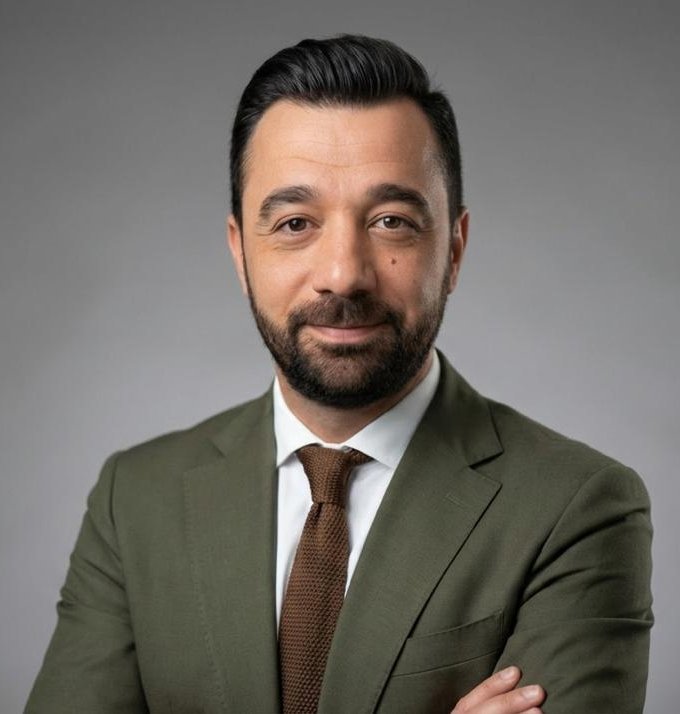
Serkan Baysal leads Barok Estates International & Barok Montenegro Private Office with international experience across Spain, U.A.E, U.K., Turkiye and Montenegro, bringing a cross-market understanding of how private buyers and investors evaluate premium real estate.

Manuel Mato brings senior international business leadership to Barok Estates International & Barok Montenegro Private Office, with extensive experience across strategic partnerships, institutional client relationships and cross-border execution in Europe, the Middle East and Africa.