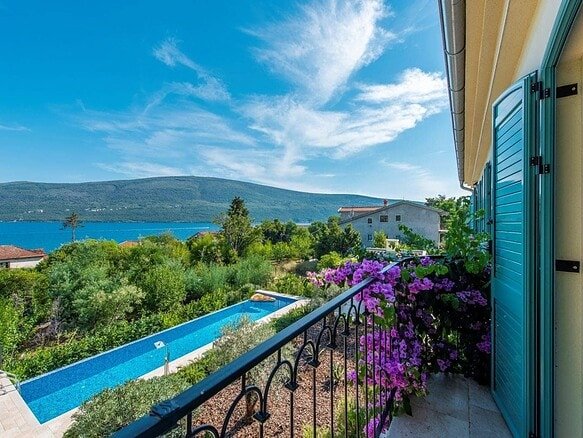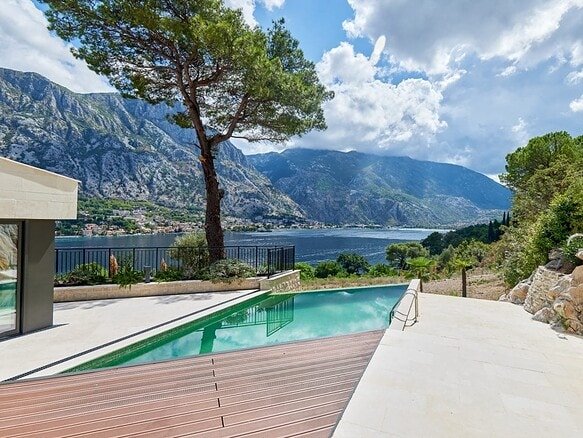
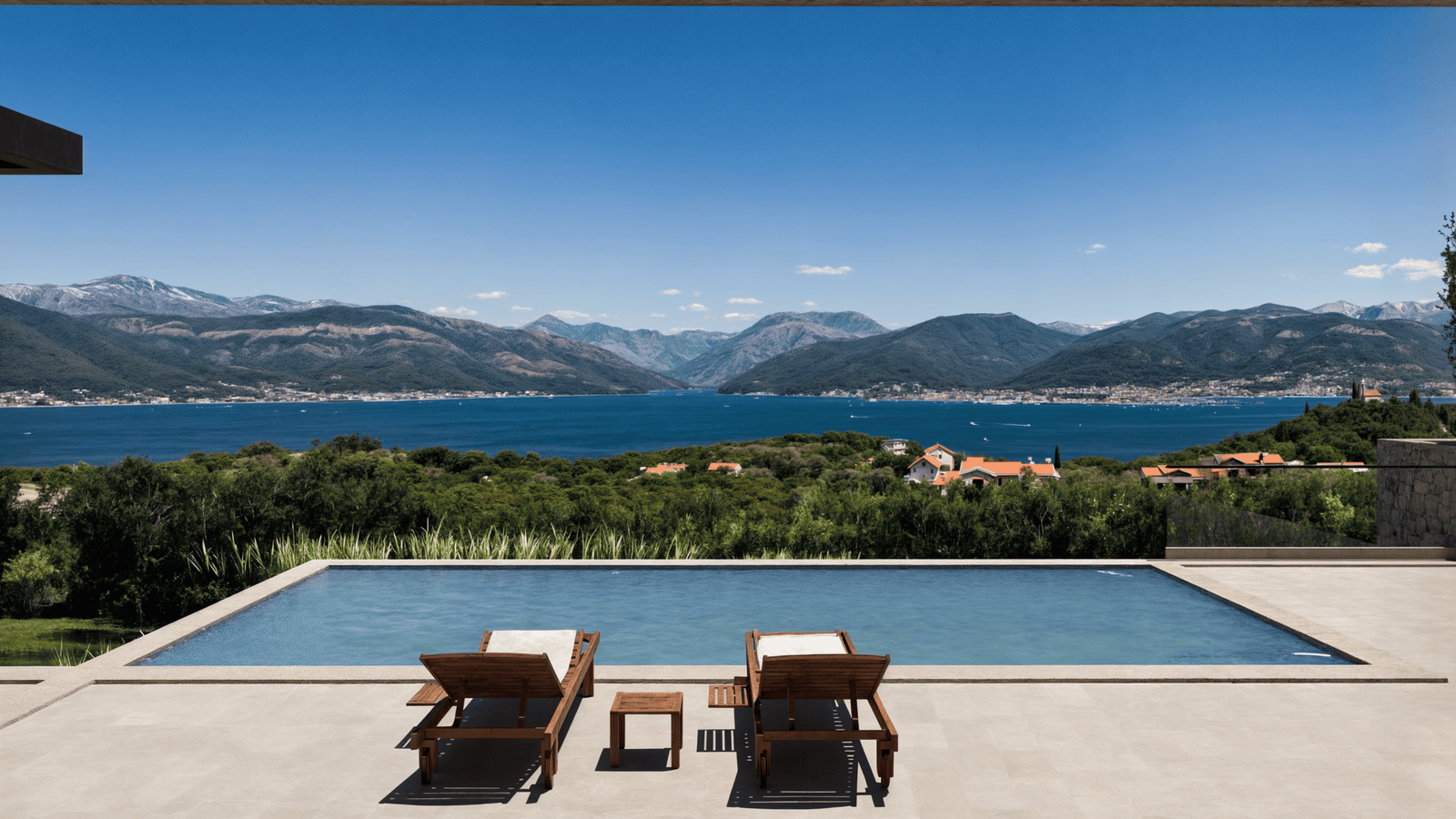
Budva and Tivat sit within 45 minutes of each other on Montenegro’s Adriatic coast, but they represent two structurally different investment cases. Choosing between them is not a matter of preference; it is a function of what a given buyer is trying to achieve with the acquisition.
Two Markets, Two Strategies
Budva is Montenegro’s tourism capital. It generates the highest tourist overnight volumes on the Adriatic coast, draws a predominantly regional and Eastern European visitor base through the summer months, and produces rental demand that is intense but seasonal. The market is well established, well known, and built for short-term cash flow.
Tivat occupies a different position. Centred around Porto Montenegro and the Lustica Bay development, it targets wealthier buyers and tenants, attracts international capital seeking lifestyle assets, and benefits from Tivat Airport’s direct connections to major European cities. It is the premium end of Montenegro’s coastal hierarchy. A buyer here is acquiring a different asset class, not simply a better version of what Budva offers.
This distinction matters because the two markets are often compared as though they are alternatives of the same type. They are not. A buyer optimising for gross rental yield and maximum summer occupancy will find more of what they want in Budva. A buyer prioritising capital preservation, tenant quality, and longer-term appreciation linked to Montenegro’s EU accession trajectory will look first at Tivat and the broader Bay of Kotor area. Our analysis of Bay of Kotor versus Budva provides the wider regional framing, but the Budva versus Tivat question is worth examining in its own right.
Prices in 2026
Budva typically transacts in the range of €2,500 to €4,000 per square metre for well-positioned coastal apartments, though prime sea-view units in newer developments command more. The market has strong tourism demand to support pricing, but it is also the most built-out coastal location in Montenegro, which means supply is more competitive than in previous years.
Tivat operates across a wider band. In Porto Montenegro’s marina-front segment, buyers should budget north of €8,000 per square metre for quality units, with prime first-line residences in the most sought-after position reaching significantly higher values. Outside this ultra-prime zone, more accessible pricing exists in residential areas within a short distance of the marina, where expatriate and long-term tenant demand provides steady income without the same entry cost. Buyers considering the Porto Montenegro marina area will find a market that operates by different rules to the broader Montenegrin coast.
Montenegro’s transfer tax on resale property is progressive: 3% on the value up to €150,000, 5% on the portion between €150,001 and €500,000, and 6% above €500,000. New-build properties purchased directly from a developer are instead subject to 21% VAT, with no transfer tax applied on first sale. These rates apply equally across both Budva and Tivat. Our full Montenegro property taxes and purchase costs guide covers the complete acquisition cost structure in detail.
Rental Yields and Income Profile
In Budva, net rental yields on well-located tourist apartments typically run between 5% and 6% per year, assuming professional property management and realistic assumptions about the length of the productive season. The window from June to September drives the majority of annual income. Off-season occupancy is weak unless the property also attracts long-term tenants through the winter months. Our Montenegro coastal rental yields analysis details how yield is determined by micro-location, property quality, and management capability rather than market averages alone.
In Tivat, percentage yields are generally slightly lower than Budva’s tourism-peak figures, but the income profile is meaningfully different in structure. Tivat attracts expatriates, diplomats, and professionals connected to the marina and international education sector, providing year-round tenants who require considerably less management turnover than short-term summer guests. The revenue is more stable across all twelve months, if less dramatic at peak.
A buyer who models both markets honestly will often find that Tivat’s yield compression relative to Budva is partially offset by lower vacancy rates, lower management costs, and a more predictable cash flow across the year. The Budva real estate market suits buyers who are comfortable with seasonality and have the infrastructure in place to manage guest turnover efficiently. The Lustica Bay development, positioned between Tivat and the open Adriatic, offers a third model: resort-led amenity with its own beach club and marina, which effectively extends the tourist season and diversifies the income base.
Capital Growth and the EU Accession Angle
Montenegro’s EU accession trajectory is the structural argument that sits behind much of the premium real estate case across the country. Infrastructure investment, regulatory convergence, and increasing European mobility into the region benefit all coastal markets. The consensus among informed buyers is that Tivat and the Bay of Kotor area stand to gain disproportionately. The airport, the marina infrastructure, and the concentration of internationally recognised residential developments create a degree of scarcity that Budva’s more built-out market cannot replicate.
Budva remains a strong market. The Budva Riviera continues to attract foreign capital, and the town’s market has a proven resale track record across multiple buyer cycles. For capital growth over a five to ten year horizon tied specifically to Montenegro’s EU accession story, however, the weight of evidence currently favours Tivat and the Bay of Kotor over Budva.
Our broader review of where Montenegro stands in the current real estate cycle provides the macro context within which both markets are operating.
The Kotor Variable
Buyers comparing Budva and Tivat should also hold Kotor Bay as a third consideration. Kotor, Dobrota, and the villages along the bay’s western shore offer the UNESCO-recognised historic backdrop that neither Budva nor Tivat can match. Kotor real estate has its own price dynamics and buyer profile, and for those drawn to character and historical fabric over amenity-led development, the bay itself is the product. The entry price is typically lower than Porto Montenegro’s prime zone, while the appreciation argument is similarly linked to EU convergence and the broader Bay of Kotor scarcity story.
Positioning the Decision
The Budva versus Tivat question resolves to this: Budva is a cash-flow market with proven tourism depth but limited supply scarcity. Tivat is a capital-preservation market with premium positioning, EU-linked appreciation potential, and a tenant base that does not change with the season. Most buyers who approach this question are not choosing between equivalent options. They are clarifying what an acquisition in Montenegro is meant to do for their portfolio.
Understanding where residency considerations intersect with property strategy is often part of that conversation. Our piece on why serious buyers are positioning in Montenegro for residency now covers that dimension in detail.
Barok Estates International advises buyers across both markets, including within Porto Montenegro and across the Budva Riviera. The advisory approach begins with the acquisition objective and works backwards to the asset, rather than the other way around. For buyers who want independent intelligence on current inventory and pricing across both Budva and Tivat, contact our team directly through the Barok Estates contact page.
For current market data on foreign investment flows into Montenegro and coastal price movement, the Montenegro Statistics Office (Monstat) publishes quarterly residential real estate transaction data.