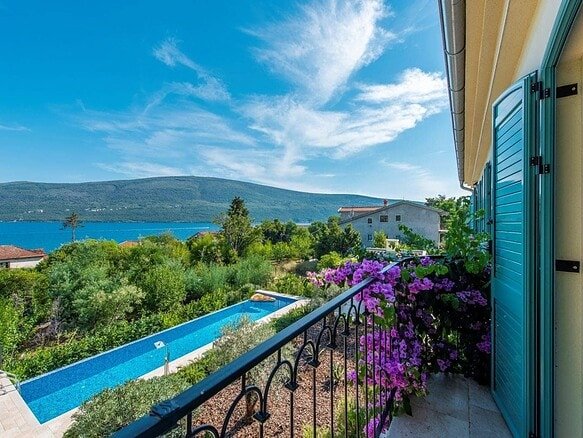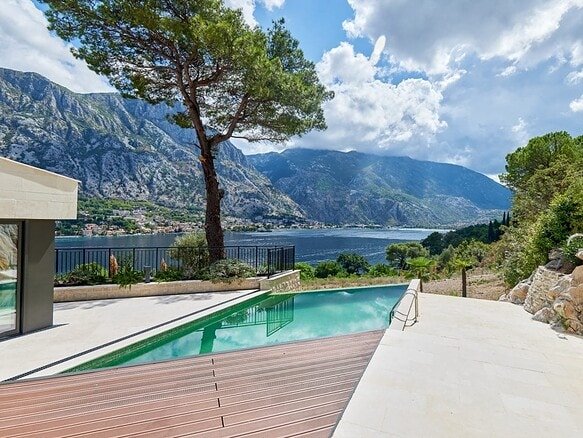

The Adria Future Summit in Tivat signals Montenegro’s growing role as Southeast Europe’s strategic business and investment hub, reinforcing its appeal to international capital. (see the Montenegro Statistical Office (MONSTAT))
Tivat Becomes Southeast Europe’s Strategic Node: What the Adria Future Summit Signals
Over 1,000 regional leaders gathered in Tivat in April 2026 for the Adria Future Summit. Montenegro regional development investment was one of the key topics addressed during the event. A coastal town of 3,600 residents hosted conversations that will reshape Southeast European investment patterns. Here’s what the summit revealed about the region’s future, and why real estate investors should be watching closely.
The Event: A Watershed Moment for the Adriatic
Porto Montenegro hosted the Adria Future Summit from April 22-24, 2026. Attendance was striking: 1,000+ participants, 70+ sessions, speakers from governments, multinational corporations, and regional development organizations across Southeast Europe.
The venue choice was deliberate. Tivat, a town most Western European investors had never heard of five years ago, was now significant enough to host a regional economic forum.
This signals a fundamental shift: Southeast Europe is no longer a peripheral investment zone. Notably,. It’s becoming a destination for serious capital deployment.
What Makes Tivat the Right Choice, and Why Now? At Porto Montenegro?
Three reasons converge:
First, Infrastructure Commitment
Montenegro is investing 9.5 million euros in water and wastewater infrastructure upgrades in Tivat. Importantly, this is not theatrical government spending. This is foundational. You cannot scale coastal development without reliable utilities. The fact that Montenegro is making this investment specifically in Tivat signals clear prioritization.
Accompanying this are airport capacity upgrades (both Tivat and Podgorica), road improvements connecting Tivat to regional capitals, and moreover, port modernization. These are the unstated determinants of property value. As a result, when governments build water systems and roads, property values follow.
Second, EU Accession Momentum
Montenegro has opened all 35 EU accession chapters and closed 14 as of March 2026. Clearly, this is not “someday” language. This is mid-process. The EU has committed 383.5 million euros in growth funding through 2028, specifically to support Montenegro’s accession reforms.
Therefore, for investors, EU accession is a decision catalyst. When a country is 3-5 years from membership, capital rotates in anticipation of regulatory harmonization and market access. The Adria Future Summit was, in many ways, a regional showcase of that rotation. Consequently, capital positioning accelerated.
Third, Regional Positioning
Tivat is geographically central to Southeast Europe. In particular, it is 2.5 hours from Podgorica, 3 hours from Skopje, 4 hours from Pristina, and 6 hours from Sarajevo. It has an international airport, a deep-water marina, and Mediterranean coastline.
For a multinational company or investor seeking a Southeast European base that combines European standards with emerging-market accessibility, Tivat is the answer. It’s neither raw Balkans nor expensive Western Europe. By contrast, it’s the intersection.
Porto Montenegro, as a mixed-use development, became the natural venue because it already operates at European standards. Moreover, it has hotel capacity, conference facilities, and the credibility to host government officials and institutional investors.
What the Summit Revealed: Three Core Themes
Theme One: Talent Retention, Not Export
Historically, the dominant narrative of Southeast Europe for 20 years has been brain drain. Young professionals leave for London, Berlin, Vienna.
By contrast, the Adria Future Summit flipped this script entirely. Multiple sessions focused on how to create conditions for talent to stay, build companies, and create value locally.
This shift carries profound implications for real estate. For example, when companies stay, they need offices. When entrepreneurs build, they need workspace. When talent stays, they need housing. Each of these creates occupier demand for property.
The summit’s message was clear: Southeast Europe is moving from “export talent” to “export solutions.” That shift requires local real estate deployment.
Furthermore, Barok Estates International advises clients on exactly this type of strategic positioning.
EU Integration as a Capital Catalyst
Theme Two: EU Integration as Capital Catalyst
Notably, every panel circled back to EU accession. Not as distant aspiration, but as immediate catalyst for regional coordination.
At the same time, the EU is deliberately investing in Southeast Europe ahead of membership because Brussels has calculated that a functional Southeast European market benefits the entire EU. In particular, that bet includes property development, infrastructure investment, and capital market deepening.
When the EU commits 383.5 million euros to Montenegro through 2028, notably, it’s not charity. It’s a down payment on regional integration that will generate multiplier effects (job creation, business formation, tax revenue) once the country is inside the EU framework. (see PwC’s international tax summaries)
For real estate investors, this signals: EU capital flows are pre-positioning now. Once accession is formalized, those flows will normalize and retreat. The opportunity window is compressed to the years immediately before and after membership.
Theme Three: Sustainability as Competitive Differentiation
Notably, one-third of the summit addressed renewable energy, sustainable development, and green building standards.
Montenegro has advantages here. The country’s hydroelectric capacity is substantial. New coastal developments are being built to EU environmental standards ahead of accession. Consequently, this creates a competitive advantage post-accession when all EU member states must operate under identical environmental regulations.
Developments like Lustica Bay, positioned as eco-luxury, will have lower compliance costs post-accession precisely because they met those standards early.
Therefore, for investors, this matters:: new-build properties constructed to EU standards now will have lower operating costs and faster regulatory clearance post-accession. Older properties will face retrofit costs.
Porto Montenegro’s Evolution: From Developer Project to Regional Platform
Porto Montenegro was conceived as a waterfront residential development with marina facilities. It has evolved into something more significant: a regional economic node.
The evolution is visible in its revenue streams. Certainly, residential sales generate income. But now hospitality (hotels, restaurants, event hosting) generates substantial revenue. Marina operations generate recurring income. Event hosting (like the Adria Future Summit) generates platform value.
Ultimately, this transformation from pure real estate to integrated platform changes the investment thesis. In essence, a property at Porto Montenegro isn’t just a residential asset appreciating at normal real estate rates. It’s embedded in an operating, multi-revenue platform that generates substantial value and attracts repeat international attention.
Consequently, for investors, this platform status adds valuation lift. Ultimately, Porto Montenegro properties command 30-40% premiums over comparable coastal properties precisely because they’re part of an operating infrastructure, not standalone residences.
What This Means for Coastal Property Values
The Adria Future Summit announcement, “We’re hosting 1,000 international delegates in Tivat,” has a subtext for property investors: “Tivat is becoming a regional node.”
When coastal towns become nodes (places where decisions are made, networks form, capital concentrates), property values behave quite differently. They don’t just appreciate with tourism. They appreciate with status.
In fact, investors buying coastal property in Tivat in 2026 are not betting on beach tourism. They’re betting on Tivat’s emergence as a regional center with infrastructure investment, government support, and EU accession tailwinds.
The summit formalized what was previously intuitive. Now it’s explicit: Tivat is strategically important to Southeast Europe’s integration into the EU.
The EU Accession Context: Why Timing Matters
Montenegro’s path is clear: chapters are closing, capital is committed, membership is projected for 2027-2028.
Therefore, this is the kind of market dynamic that Barok Estates monitors closely for its UHNW clientele.
Historical precedent from Croatia, Bulgaria, and Romania shows a consistent pattern: property appreciation accelerates 12-24 months before accession vote, peaks at membership moment, and normalizes 12-24 months post-membership.
Why the 2026 Timing Matters for Property Investors
The Adria Future Summit occurred in April 2026, approximately 18-24 months before likely accession vote. Notably, this is when institutional capital begins large-scale positioning.
Therefore, for property investors, this timing is critical. Entry in 2026 captures the accession run-up. Purchasing in 2027-2028 captures most of it. Post-accession acquisitions, by contrast, capture none of it.
Regional Stability: Why Montenegro Leads the Pack
Notably, one consistent theme throughout the summit: Montenegro is the stable entry point to Southeast European investment.
When compared to Albania (infrastructure fragmentation), Kosovo (political volatility), North Macedonia (landlocked, political challenges), and Bosnia (governance complexity), Montenegro is straightforward. It’s small enough to execute cleanly, stable enough to attract institutional capital, and positioned clearly on the EU path.
Consequently, for investors, this stability premium is worth 10-15% of property value. You’re paying for political clarity and regulatory certainty, not just Mediterranean access.
What Comes Next: The 2027-2028 Compression
The 2026-2028 Investment Window
The summit marked a strategic inflection. Therefore, here’s what’s likely to unfold:
2026 (Now): Capital pre-positions. Risk premium is still present. Property prices are still pre-accession. Yields are attractive.
2027: Accession negotiations formalize. Capital begins openly positioning. Risk premium compresses. Property prices accelerate upward.
2028: Accession vote likely occurs. Regulatory harmonization accelerates. The full 15-25% accession premium plays out within 12 months.
Post-2028: Prices converge to EU levels. Accession discount disappears. Future appreciation follows normal market rates.
Investors positioning in 2026 capture the entire cycle. The window is real but compressed.
The Real Estate Play: Mixed-Use Beats Single-Use
The summit’s implicit message was clear: integrated, mixed-use developments outperform single-use residential.
Indeed, Porto Montenegro’s success as a venue reflects its operational complexity. It’s not just apartments. It’s residences plus marina plus hospitality plus office plus event space plus dining.
Therefore, when property investors evaluate Montenegrin opportunities, they should prioritize:
Mixed-use platforms (Porto Montenegro, Lustica Bay) over standalone apartment buildings. Platforms have diversified revenue and attract institutional capital at lower cap rates.
In addition, tourism-anchored developments are superior to purely residential. Tourism is structural in Montenegro. Properties benefiting from tourism demand appreciate differently than inland real estate.
EU-standard construction over lower-cost building. Pre-accession, EU-standard properties have lower compliance costs and faster regulatory clearance post-accession.
Institutional management over boutique operations. Institutional-quality properties attract institutional capital at premium valuations.
Conclusion: The Signals Are Clear
The Adria Future Summit was not just a regional conference. It was a signal: Southeast Europe is moving from “post-conflict reconstruction” to “regional integration and capital deployment.”
Montenegro is leading that movement. Tivat is becoming a node. Porto Montenegro is becoming a platform. Notably, property values are responding accordingly.
Therefore, for UHNW investors, the signal is clear: the time to position is now, before the accession cycle compresses prices and erases the pre-accession discount.
The window is open. But it will not stay open indefinitely.
Barok Estates International provides expert guidance for buyers and investors seeking premium real estate. Explore our current portfolio or contact our team to learn more.