Southern Europe real estate is outperforming the EU average in 2026, with transaction volumes up 24% year-on-year, driven by structural demand growth in Spain, Portugal, and Montenegro. (see the Instituto Nacional de Estadistica (INE))
Notably, Southern Europe is outpacing the EU average in economic growth, driving sustained demand for premium real estate. Transaction volumes reached €35 billion in 2025, a 24% increase year-over-year and an all-time high. This momentum extends into 2026, supported by structural tailwinds: renewable energy independence, tourism resilience, favorable logistics dynamics, and a maturing institutional investment landscape.
For UHNW buyers and strategic investors, the region represents a shift from “satellite allocation” to “core European exposure.”
The Economic Foundation: Growth Where It Matters
In particular, Spain, Portugal, and Greece are delivering the growth Europe’s largest economies cannot match. Oxford Economics forecasts GDP expansion of 2.4% for Spain, 2.1% for Portugal, and 1.8% for Greece in 2026, compared to just 1.0% for the EU27 average.
Consequently, what does this mean for real estate? Occupier demand follows GDP growth. As businesses expand, they lease space. When consumer confidence rises, hospitality and retail thrive. When savings rates increase, residential demand strengthens. Southern Europe has all three working in its favor.
As a result, Barok Estates International has positioned clients in these markets for five years. We’ve watched the narrative shift from “recovery play” to “core strategic allocation”, and 2026 marks the inflection point where that shift becomes obvious to institutional money.
Why Transaction Volumes Matter: €35 Billion Tells the Story
The €35 billion transaction volume in Spain, Italy, Portugal, and Greece during 2025 wasn’t a spike, it was validation. A 24% increase over 2024 signals that capital is rotating toward Southern Europe with conviction, not speculation.
Furthermore, here is the critical insight: High-volume markets create pricing stability. When deal flow is strong and capital abundant, property prices reflect genuine demand, not desperation or distress. This is why Barok advises clients to buy in 2026: the market is deep enough to absorb large purchases without moving prices against you, yet still early enough in the cycle that you’re buying before the next wave of institutional capital arrives.
Therefore, for UHNW buyers from the GCC, UK, and US markets, this timing is strategic. You’re not racing against herd mentality, you’re investing ahead of it.
The Structural Advantages: What’s Different Now
Historically, in previous cycles Southern Europe benefited from tourism and holiday homes. 2026 is different. The real estate boom now rests on four structural foundations:
1. Energy Independence and Cost Visibility
Meanwhile, renewable energy penetration in Spain, Portugal, and Greece is reshaping the economics of real estate operations. Higher domestic renewable capacity means lower exposure to imported energy shocks and more predictable operating costs for hospitality, logistics, and office tenants.
As a result, for investors this translates to more stable yields and lower refinancing risk. For occupiers, it means lower occupancy costs and better business predictability, especially critical for energy-sensitive sectors like manufacturing, data centers, and food production.
2. A Deeper Institutional Asset Universe
Southern Europe’s real estate market has matured beyond traditional office and retail. The “living sector”, care homes, senior housing, student accommodation, and wellness retreats, is now liquid and attracting dedicated capital from European pension funds and family offices.
Consequently, this expansion means more deal flow for institutional investors, better pricing discovery, reduced reliance on tourist cycles, and defensive asset classes attracting long-term capital.
3. Tourism Resilience as a Permanent Tailwind
For example, Spain received 92+ million international arrivals in 2025. Portugal is on track to exceed 30 million. Greece continues to set records. This isn’t volatile, it’s structural demand from emerging middle classes discovering Mediterranean destinations.
In turn, for real estate investors tourism resilience means sustained hospitality demand, residential premiums near prime locations, and workforce demand in hospitality-adjacent sectors.
4. E-Commerce Exposure Remains Lower Than Core Markets
Similarly, Southern European retail is less disrupted by e-commerce than Northern Europe or the US, because lower density and higher tourism mean physical retail still drives conversion. This keeps retail properties valuable and landlords in stronger negotiating positions.
The Investment Thesis: From Satellite to Strategic
However, when Barok Estates entered Southern Europe five years ago, institutional investors treated the region as a “satellite allocation”, a small portfolio diversifier, typically 2-5% of capital. Volatility in GCC politics, Brexit uncertainty, and US Fed policy meant that European allocations remained conservative.
However, 2026 changes this. The region is moving to “strategic exposure”, meaning 8-12% allocations from quality capital. This shift brings three consequences: capital acceleration (more money chasing the same assets), market maturation (deal timelines compress), and diminishing first-mover advantage.
Timing is critical. Investors who position now (Q2 2026) benefit from structural demand before the full wave of institutional capital arrives. Investors waiting until Q4 2026 will face tighter pricing and longer transaction timelines.
Where Barok Sees Opportunity: Spain, Montenegro, Portugal
Spain: The Growth Engine
Spain’s 2.4% GDP forecast is Europe’s third-largest economy showing real momentum. Madrid and Barcelona office markets are recovering. Coastal residential demand remains strong. Logistics around Madrid-Valencia-Barcelona is attracting pan-European operators.
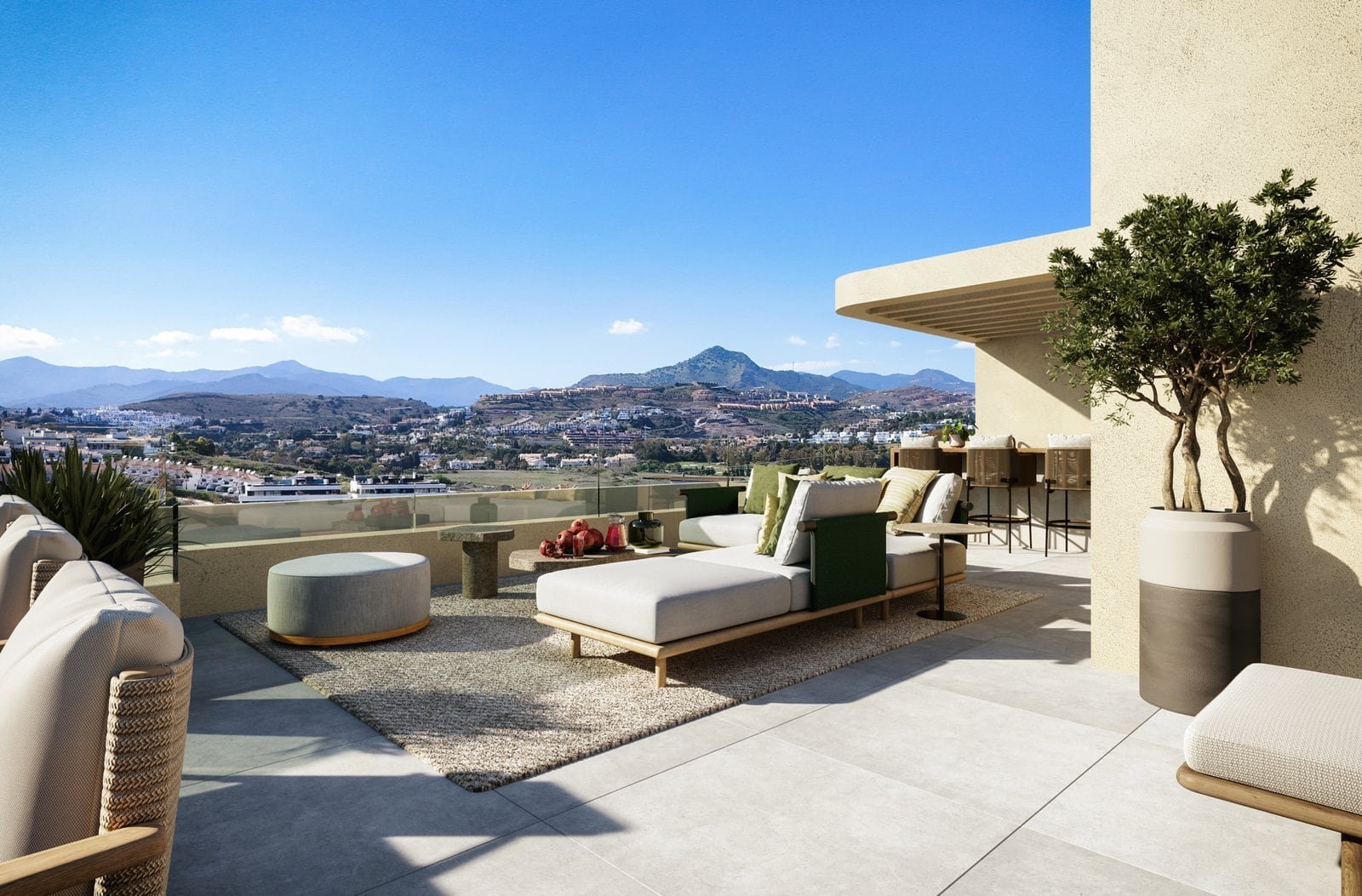
Barok positioning: Premium residential on the Costa del Sol and Benahavis; select office and logistics in Madrid suburbs; hospitality in Barcelona and coastal resort towns.
Montenegro: The EU Accession Play
At the same time, Montenegro is 2 years away from EU membership. This creates a compressed window for pre-accession pricing. Post-accession, property values typically increase 15-25% within 12 months as the region becomes accessible to European investors under harmonized regulations. (see the Montenegro Statistical Office (MONSTAT))
Porto Montenegro in Tivat represents the institutional-grade asset that bridges this transition: already built to international standards, managed professionally, and positioned to capture both pre- and post-accession investor demand.
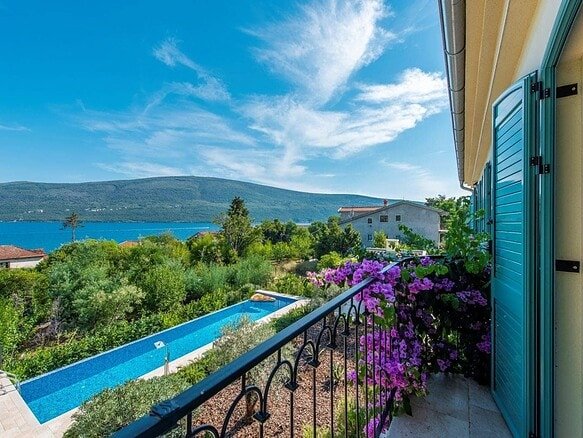
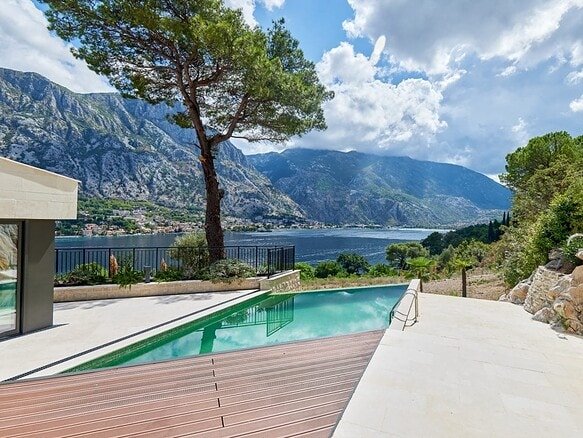
Barok positioning: Premium waterfront residential in Tivat and Kotor Bay; private marinas and superyacht infrastructure; lifestyle amenities.
Portugal: The Demographic Play
Moreover, Portugal’s 2.1% GDP growth is supported by aging European demographics. Senior housing, retirement communities, and long-term care facilities are seeing capital inflows. Lisbon and Porto residential markets remain affordable relative to Western Europe.
Barok positioning: Senior living facilities and wellness retreats; historic property conversions in central Lisbon and Porto; beachfront residential in the Algarve.
What Doesn’t Change: Barok’s Selection Criteria
Importantly, strong structural tailwinds don’t mean every deal works. Barok applies rigorous standards: location premium (supply-constrained micro-markets), institutional quality (European standards), occupier demand (real economic drivers), and regulatory clarity (stable property rights).
For instance, a property in a secondary Spanish city might still be a poor investment if it lacks these characteristics. A premium property in a primary market with institutional demand is a better opportunity, even if macro growth is “only” 2.4%.
Ultimately, our role is to distinguish between structural tailwinds and speculative bubbles. We position clients where fundamentals and timing align.
The Risk Factors: What Could Change
Southern Europe’s 2026 outlook is strong, but not certain. Monitor: geopolitical volatility (could affect GCC investor confidence), interest rate stability (spikes widen cap rates), tourist demand normalization (recession in source markets), and regulatory changes (EU environmental standards).
Nevertheless, none are deal-breakers. They’re factors that change timing, not fundamentals.
Conclusion: The Window Is Now
In summary, Southern Europe’s real estate markets are at an inflection point. Structural factors are aligned. Capital is rotating toward the region. Transaction volumes are at all-time highs. GDP growth outpaces the EU average.
For UHNW buyers, the 2026 window is optimal: early enough to capture structural appreciation before institutional money fully arrives, late enough that the market demonstrates liquidity and pricing efficiency.
Above all, Barok Estates has spent five years building relationships, understanding micro-markets, and positioning clients. We’re not chasing last year’s returns, we’re positioning for 2026’s opportunity set.
The next 12 months will determine who positioned early and who arrives late. Structural tailwinds are firmly in place. Capital is ready to deploy. The timing is there.
Barok Estates International provides expert guidance for buyers and investors seeking premium real estate. Explore our current portfolio or contact our team to learn more.