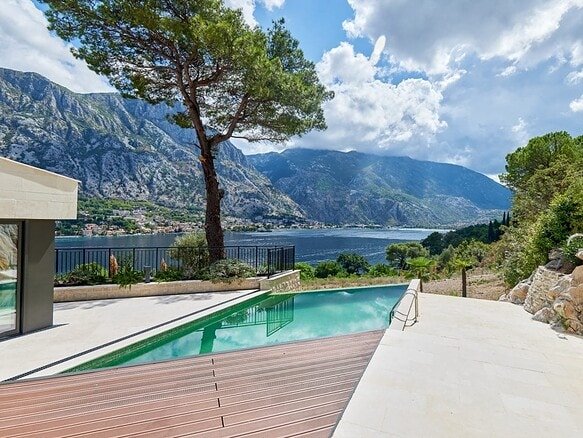
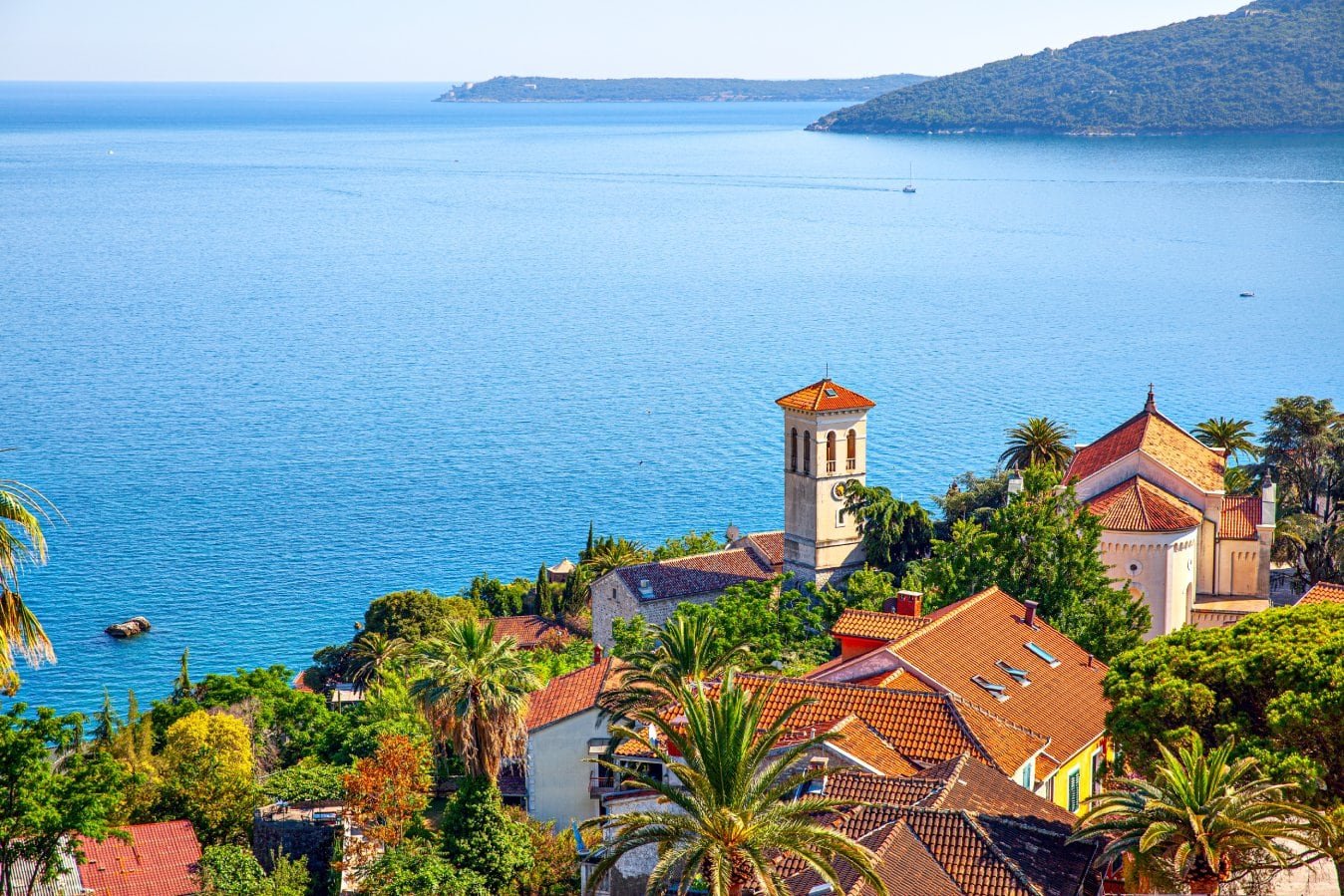
Consequently, tL;DR: Montenegro’s coastal property market entered 2026 with strong momentum, rising prices, and growing foreign buyer demand, positioning it as one of Europe’s most attractive emerging luxury real estate markets. (see the Montenegro Statistical Office (MONSTAT))
2026 opens with the market in a structurally different position
Montenegro’s coastal property market entered 2026 with strong momentum from two consecutive years of above-trend price growth. Average coastal prices rose 15 to 20 percent through 2024 and 2025, with prime waterfront units outperforming that average substantially. What is new in 2026 is the breadth of buyer interest: demand is no longer concentrated among a single nationality or investor type. It is diversifying across geographies and buyer profiles at the same time as supply remains structurally constrained.
This is not a bubble dynamic. It is a market repricing toward a level that better reflects its fundamentals: Adriatic location, EU accession trajectory, world-class marina infrastructure, and a price base that still sits 40 to 60 percent below comparable EU-member coastal markets.
For a complete overview of the Montenegro property market, visit our Montenegro real estate hub.

Price Performance: What Has Happened to Montenegro Property Values
The headline data for 2024 to 2025 is unambiguous:
- Coastal average: 15 to 20 percent price growth across tracked coastal municipalities
- Tivat waterfront: Select marina-adjacent units have appreciated 25 to 30 percent since 2022, with some pre-launch allocations now showing embedded gains before practical completion
- New build premium: New development commands a 15 to 20 percent premium over comparable resale stock, reflecting demand concentration in off-plan and pre-launch product where buyers can secure current prices for future delivery
The context that matters for buyers evaluating whether to act in 2026: Montenegro’s coastal market, even after two years of strong growth, remains 40 to 60 percent below equivalent Adriatic addresses in EU member states. A comparable waterfront apartment in Split or Dubrovnik trades at EUR 7,000 to 12,000 per sqm. In Tivat, the equivalent product is EUR 5,000 to 10,000 per sqm, with the premium Marina-adjacent units at the top of that range. The convergence gap is still material.
Who Is Buying in Montenegro in 2026
The buyer composition in 2026 is more diverse than at any previous point in the market’s development:
British and Northern European buyers: The most consistent source of international demand. Primarily lifestyle-led, second-home focused, attracted by the combination of direct flights from London Gatwick (2 hours 30 minutes to Tivat), the quality of the marina environment, and value relative to comparable Mediterranean addresses. Many have previously owned in Croatia or Spain and are entering Montenegro as their second international property market.
GCC and Middle East capital: This segment has accelerated sharply in early 2026. Regional instability in the Middle East is driving a reassessment of asset geography among Gulf family offices and private wealth holders. Montenegro offers European legal framework, euro-denominated assets, no wealth tax, no capital gains tax after two years, and a stable political environment. Inquiries from this segment to Barok Estates International increased materially in Q1 2026 compared to Q1 2025.
Eastern European investors: Buyers from Poland, Czech Republic, Hungary, and the Baltic states are using Montenegro for a combination of portfolio diversification and lifestyle residency. The ease of obtaining Montenegrin residency from property ownership is a factor, as is geographic proximity: Tivat is accessible from most Eastern European capitals in under 3 hours by air.
Digital nomads and extended-stay residents: A smaller but growing segment, attracted by Montenegro’s 183-day residency provision, low cost of living relative to Western Europe, and the quality of life in the Bay of Kotor area. This group is sustaining year-round rental demand in a way that was not visible 3 years ago.

Supply: Why Inventory Remains Constrained
Understanding Montenegro’s supply dynamics is essential to the investment thesis.
The coastal zone faces layered supply constraints:
- Planning restrictions: Montenegro’s coastal zone is subject to the Law on the Coastal Zone, which restricts new development within defined distances of the shoreline. The law has been progressively tightened following EU alignment requirements, and new development approvals in prime coastal areas have slowed substantially.
- Environmental protections: The Bay of Kotor is a UNESCO World Heritage site. Development within the bay is subject to additional oversight that limits new supply entering the market.
- Pre-launch allocation: The most sought-after new developments, including the Tivat waterfront development represented by Barok Estates International, sell through pre-launch allocations to qualified buyers before units reach the open market. This means the publicly visible inventory understates actual demand, and buyers relying on open-market searches will find the best product already gone.
The result is a market where demand is broadening and supply is not responding at the same rate. This is a structural feature, not a temporary condition.
Rental Market: What Investors Are Achieving
Montenegro’s rental market in 2026 presents a more nuanced picture than a simple summer-season yield calculation:
Summer season (June to September): This remains the dominant rental period. Occupancy rates of 85 to 90 percent are common for well-managed waterfront product. Nightly rates for quality marina-adjacent apartments range from EUR 150 to EUR 600 per night depending on size and specification.
Gross yields: Managed rental programmes on prime waterfront product are generating 5 to 8 percent gross annually. Self-managed operators willing to invest in marketing and guest management are achieving above the top of this range.
Year-round demand in Tivat: The superyacht marina is changing the rental seasonality of Tivat specifically. Superyacht crew requiring accommodation during winter layovers and spring commissioning periods, combined with marina-adjacent business visitors and the year-round expat community, is sustaining occupancy in shoulder and off-peak months that other Montenegro coastal locations do not see. This makes Tivat the most defensible yield proposition on the coast on an annualised basis.
See the Tivat development page for current rental programme structures and projected yields.
Outlook for the Rest of 2026 and Into 2027
The structural drivers supporting Montenegro’s coastal market are not showing signs of reversal:
EU accession timeline: The 2028 to 2030 accession window is drawing closer. Institutional investors that have historically waited for confirmed accession before entering are beginning to position earlier, following the Croatian precedent. This is bringing new categories of capital into the market.
Geopolitical repositioning: The broader trend of Middle Eastern and GCC wealth seeking European safe-haven assets is structural, not cyclical. Montenegro benefits as part of this broader European Adriatic exposure.
Supply constraint permanence: The planning restrictions and environmental protections limiting new coastal supply are not being relaxed. If anything, EU alignment will tighten them further. The supply picture for prime waterfront product in 2027 will be tighter than it is today.
Price trajectory: Continued appreciation is expected across coastal markets, with Tivat and constrained waterfront zones expected to outperform the broader coastal average. The risk of a sharp correction is low given the structural demand drivers and the absence of speculative leverage (the market is predominantly cash-purchased).
For those considering Montenegro, the outlook analysis points consistently in one direction: the cost of waiting is real. Read our complete guide to buying property in Tivat to understand the acquisition process.
Frequently Asked Questions
Request a Private Briefing
Barok Estates International provides qualified buyers with current market intelligence, pre-launch pricing, and a full investment briefing on select waterfront opportunities in Tivat. No additional buyer cost.
Email: [email protected]
Phone/WhatsApp: +34 614 100 466
Barok Estates International provides expert guidance for buyers and investors seeking premium real estate. Explore our current portfolio or contact our team to learn more.