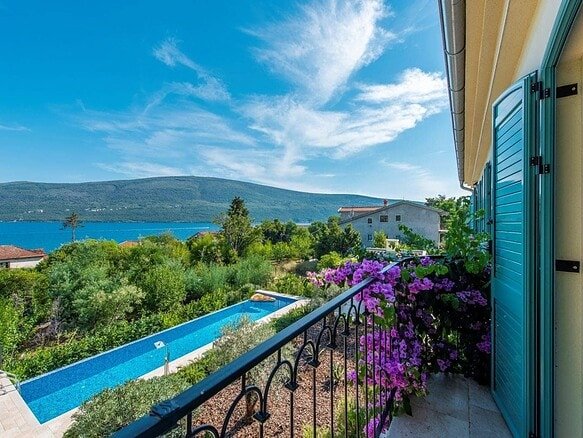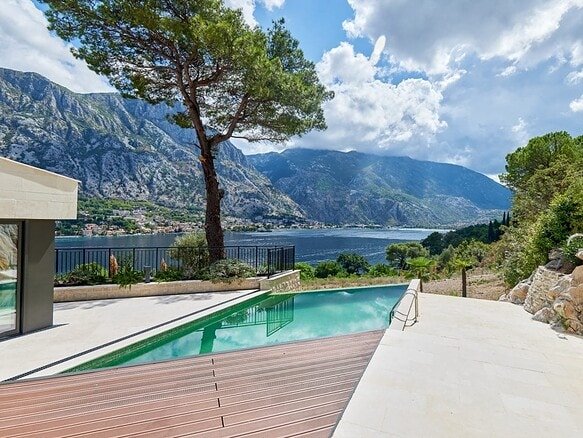

Buying property in Budva in 2026 gives international investors access to one of the Adriatic’s most liquid coastal markets at a price point that still compares favourably with competing destinations such as the Algarve or the Croatian coast. Montenegro’s legislative alignment with EU frameworks ahead of accession negotiations has made Budva a credible destination not only for lifestyle buyers but for capital seeking structured, mid-horizon returns. Whether the acquisition is income-led, capital-preservation focused, or a strategic lifestyle move, Budva warrants serious consideration.
The city operates on two distinct market layers. The broader residential stock, covering older apartment buildings, hillside plots, and resale units, offers entry points from roughly €1,800 to €3,500 per square metre. Prime seafront and new-build positions regularly sit between €4,000 and €6,000 per square metre, while branded waterfront residences can exceed this range in select developments. This two-tier structure creates meaningful opportunities for buyers who understand which layer matches their objectives.
Buyers considering buying property in Budva should note that the market has absorbed several consecutive years of international demand, particularly from British, Scandinavian, and Gulf investors. Consequently, a professional approach to due diligence has become more important than ever. The days of informal deals with minimal documentation are largely behind the serious market. What remains is a notarially governed transaction process that is broadly accessible to foreign nationals.
Where to Buy in Budva: Areas and Price Points
The Old Town and Seafront
The Old Town and immediate seafront zone attract buyers who prioritise proximity to Budva’s cultural core and walkable access to the beach. Property here tends to be older stock, with prices reflecting the premium of location rather than build quality. Renovation opportunities exist, though planning restrictions within the historic zone apply. For investors seeking short-term rental income, the area offers strong seasonal demand from June through September.
Bečići and Rafailovići
These adjacent resort villages south of Budva represent the sweet spot for many international buyers. New-build complexes command prices in the €3,000 to €5,500 per square metre range, offering modern finishes, shared amenities, and proximity to some of Montenegro’s finest beaches. Rental demand from European visitors remains high from June through September, making short-term rental strategies viable and reasonably straightforward to manage. Buyers looking at premium waterfront options in this area should review the Five-Star Seafront Residences in Budva currently represented by Barok Estates International.
Inland and Emerging Positions
For buyers with a longer investment horizon, hillside and inland positions within the Budva municipality offer meaningful upside. As coastal pricing rises, demand naturally migrates upward. Entry prices here remain accessible, and several well-regarded new developments are planned in these corridors. Due diligence on planning status and access routes is, however, essential before committing to any off-plan purchase.
The Legal Process for Foreign Buyers
Foreign nationals can purchase property in Budva without restriction in most categories. Coastal land and agricultural land carry specific limitations, which makes professional legal representation non-negotiable rather than optional. A licensed local lawyer should conduct title searches at the Real Estate Cadastre before any preliminary agreement is signed. The cadastre confirms ownership history, any registered mortgages or easements, and whether the property carries full building legalisation.
The transaction follows a clear sequence. Parties first sign a preliminary purchase agreement, typically with a ten percent deposit. A notary then prepares and witnesses the final contract, after which the buyer registers ownership at the cadastre. The full process, from agreement to registered title, normally takes between four and eight weeks on a straightforward transaction. For broader context on how this fits within the Montenegrin market, the Montenegro real estate market overview provides useful regional perspective.
Costs and Taxes When Buying Property in Budva
Understanding the full cost of buying property in Budva is critical for accurate budgeting. Montenegro’s property transfer tax is progressive: three percent applies on the first €150,000 of the purchase price, five percent on the portion between €150,000 and €500,000, and six percent above €500,000. This structure replaced the old flat-rate system in January 2024 and applies to resale transactions. New-build purchases from a developer are subject to VAT at twenty-one percent, which is typically included in the advertised price.
Beyond the transfer tax, buyers should budget for notary fees of approximately €300 to €600, legal fees typically ranging between one and two percent of the purchase price, and land registry costs. Agency fees, where applicable, generally sit between two and three percent. The PwC Montenegro Tax Summary provides authoritative reference for buyers seeking independent verification of current rates.
Investment Perspective: Why Budva in 2026
The case for buying property in Budva as an investment rests on structural factors rather than speculative assumptions. Montenegro’s EU accession process has steadily improved legal transparency, banking infrastructure, and cross-border transaction frameworks. The country uses the euro without being a eurozone member, which removes currency risk for European buyers and provides a stable pricing denominator for dollar or sterling-denominated capital.
Rental yields in Budva vary considerably by property type and management quality. Seafront apartments under professional management can achieve gross yields of five to eight percent during peak summer periods, though year-round occupancy varies. Buyers treating this as a pure yield play should model conservatively and account for management costs, utilities, and periods of lower occupancy outside the peak season.
For buyers who want to understand the broader Adriatic context before focusing on Budva specifically, the Kotor Bay area guide and the Lustica Bay property guide offer comparative perspectives on Montenegro’s other key coastal markets. The Porto Montenegro marina guide is also relevant for buyers considering the wider Gulf of Kotor as part of their decision.
Capital appreciation across the Budva municipality has been consistent over recent years, with average prices estimated to have risen by approximately twelve percent over the preceding twelve months to early 2026. Forecasts point toward continued growth in the five to seven percent range annually, supported by constrained coastal supply and growing international awareness of Montenegro as a destination. These figures should be treated as directional rather than guaranteed, and positioned accordingly within any investment thesis.
For buyers also evaluating villas on the Adriatic coast as an alternative format, the structural investment case is broadly consistent, with the added benefit of private outdoor space and direct sea access.
Barok Estates International
Barok Estates International advises on Montenegrin coastal acquisitions across the full market spectrum, from entry-level apartments on the Budva Riviera to ultra-prime waterfront residences. Our approach focuses on acquisition strategy rather than inventory presentation. When buying property in Budva, the right advisory relationship means having a partner who understands both the local transaction process and the wider capital context in which the decision sits.
Explore our curated Montenegro real estate portfolio, or contact our team for confidential availability and consultation at barokestates.com/contact.