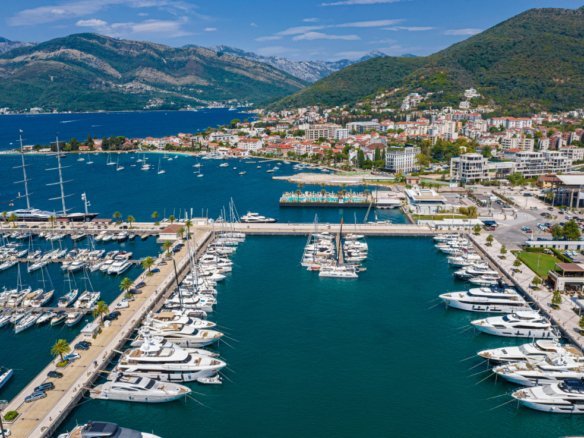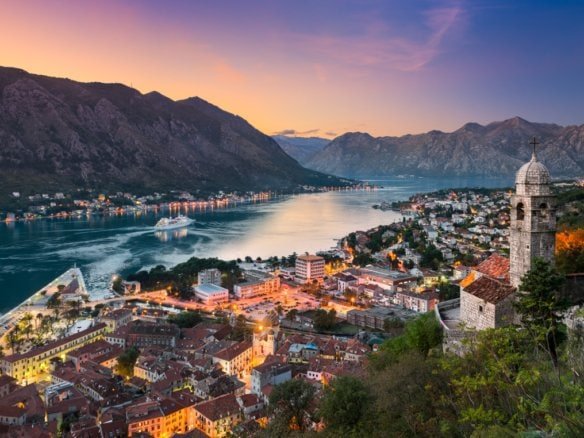
The Budva Riviera is Montenegro’s most celebrated stretch of coastline — and for international property buyers, it remains the country’s most accessible, most liquid, and most rewarding market. From the medieval lanes of Budva Old Town to the pine-backed beaches of Bečići, this 35-kilometre arc of Adriatic shoreline draws buyers from across Europe, the Gulf, and beyond.
This guide covers the Budva Riviera Montenegro in full: its distinct neighbourhoods, what the property market looks like in 2026, and why now remains a compelling moment to buy.
Budva Old Town: History at the Water’s Edge
Enclosed by 15th-century Venetian walls and jutting into the Adriatic on a small peninsula, Budva Old Town (Stari Grad) is one of the Mediterranean’s best-preserved walled cities. Its honey-coloured stone streets, Orthodox churches, and rooftop terraces command a premium that is entirely justified.
Property within the old walls is rare and tightly held. Apartments here — typically compact, character-rich, and set across multiple floors of restored stone buildings — attract buyers who value authenticity above all else. Prices reflect that scarcity: €3,000–€5,000 per square metre is standard for renovated stock inside the walls.
The old town is also the cultural heart of the Budva Riviera Montenegro. Its citadel hosts summer theatre performances, its beach is one of Montenegro’s most photographed, and its restaurants and bars operate year-round — giving properties here strong long-term rental potential.
Bečići and Rafailovići: The Riviera’s Modern Core
Immediately south of Budva, Bečići and Rafailovići form a seamless stretch of resort development along a two-kilometre Blue Flag beach. Budva Bečići has long attracted serious investment — the Avala Resort, the Splendid Conference & Spa Resort, and a string of newer boutique hotels have established this as one of the Adriatic’s most developed resort strips outside Croatia.
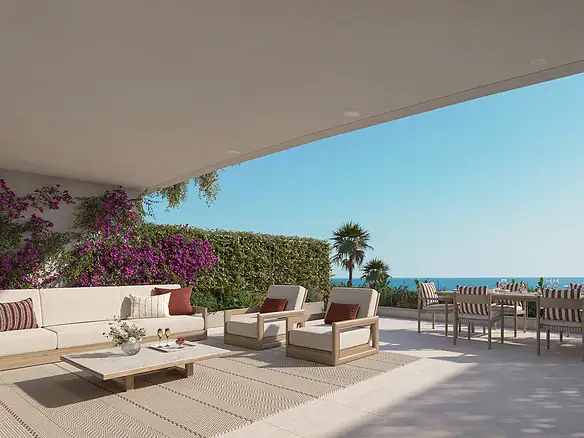
For buyers, Bečići offers the broadest choice on the Budva Riviera: new-build apartments in managed complexes, older resale flats with sea views, and a growing number of branded residences developed alongside hotel operators. The Rafailovići village end of the beach retains a quieter, more residential feel — popular with buyers seeking a full-time home rather than a pure investment asset.
Typical prices in Bečići range from €1,800 to €3,500 per square metre depending on proximity to the beach, finish standard, and sea views. Rental yields of 5–7% are achievable for well-positioned apartments managed through professional operators.
The Budva Riviera Coastline: Petrovac, Sveti Stefan, and Beyond
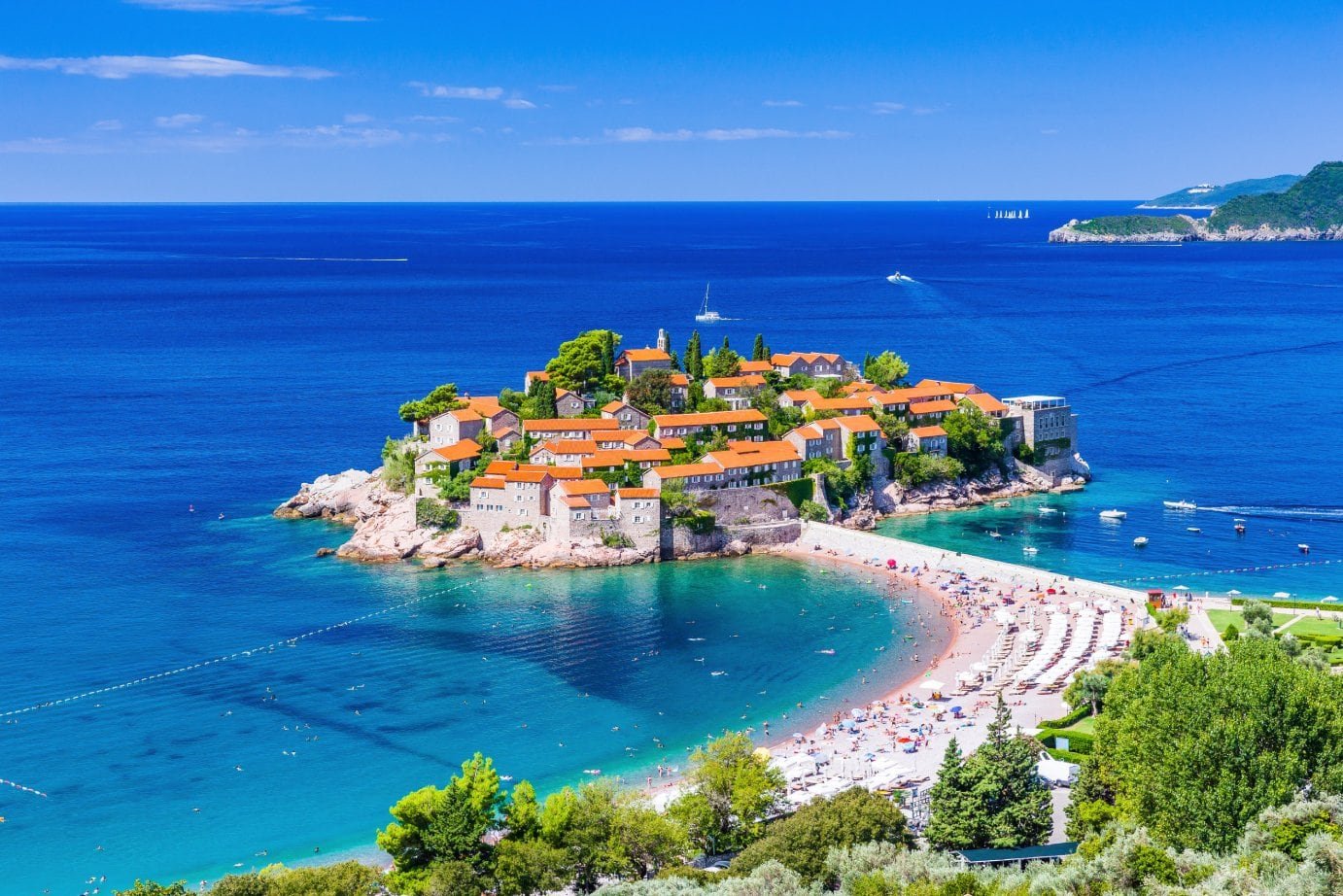
The Budva Riviera doesn’t end at Bečići. Following the coastal road south, buyers encounter a succession of smaller settlements — Petrovac na Moru, with its Roman mosaics and pine-shaded promenade; the island-hotel of Sveti Stefan, arguably Montenegro’s most iconic image; and Miločer, home to the former royal villa now operated as a Park Hotel.
These southern reaches of the Budva Riviera are quieter and more exclusive. Sveti Stefan in particular acts as a luxury anchor for the entire area — its presence signals a tier of visitor the wider market aspires to attract. Prices for villas and apartments in this corridor have risen sharply since 2020 as international demand has outpaced supply.
Is Budva Safe?
This is one of the most searched questions about the destination, and the answer is straightforward: yes, Budva is safe for visitors and residents alike.
Montenegro maintains low rates of violent crime by European standards, and Budva — as the country’s primary tourism hub — is well-policed and internationally accustomed. The town has invested heavily in its public spaces, CCTV infrastructure, and tourist support services over the past decade.
Like any busy resort destination in high season, normal precautions apply: keep valuables secure, be aware of your surroundings in crowded areas, and use licensed taxis or ride-hailing apps. But Budva poses no elevated security concerns for international buyers or their families, and the expatriate community here is established and growing.
Budva Property Market Overview: 2026
The Budva Riviera Montenegro property market entered 2026 in a position of measured strength. Prices stabilised following rapid post-pandemic appreciation, and the market is now characterised by selectivity rather than speculation: buyers are more discerning, developers are responding with higher-quality product, and the gap between well-finished and poorly-finished stock has widened considerably.
Key market dynamics to understand:
- Supply constraints: Prime beachfront land is effectively exhausted. New development increasingly occupies hillside positions with sea views rather than direct beach frontage, which is compressing prices for genuine beachfront stock.
- Tourism growth: Montenegro welcomed record visitor numbers in 2024 and 2025. Budva accounts for a substantial share of that traffic, supporting short-term rental demand across the season.
- EU candidacy: Montenegro’s continued EU accession process — it remains the most advanced candidate country — provides a structural tailwind for property values and gives international buyers additional confidence in the legal framework.
- Currency stability: Montenegro uses the euro despite not being an EU member, eliminating currency risk for European buyers entirely.
For a detailed breakdown of current prices by area and property type, see our full Budva real estate property guide.
Villas vs Apartments on the Budva Riviera
Buyers on the Budva Riviera face a fundamental choice between two quite different asset classes.
Budva villa Montenegro — typically detached or semi-detached, often with private pool and garden, positioned on elevated plots with Adriatic panoramas. Villa buyers tend to be lifestyle-led: they want space, privacy, and a base that feels genuinely residential. Prices range from €350,000 for an older, unrenovated villa requiring investment to €2m+ for contemporary architect-designed properties with unobstructed sea views. Rental income is possible but secondary to personal use for most villa buyers.
Apartments — the dominant product type on the Riviera and the most liquid asset. Entry-level studios in Bečići can be acquired from €80,000–€100,000; two-bedroom sea-view apartments in quality managed complexes typically range from €180,000–€350,000. Apartments in professionally managed rental pools generate predictable income with minimal owner effort.
The right choice depends on your use case, budget, and tax position. Barok Estates advisers can walk you through the financial modelling for either route.
Why Buy on the Budva Riviera Now
Three factors converge in 2026 to make the Budva Riviera Montenegro an unusually compelling proposition:
First, prices remain materially lower than comparable Adriatic markets. Split, Dubrovnik, and the Montenegrin Bay of Kotor all command premiums over Budva’s current pricing — without proportionately better fundamentals for international buyers.
Second, the quality of available product has improved dramatically. A wave of new developments completed between 2022 and 2025 means buyers can now access contemporary, specification-grade properties that would have been unavailable five years ago.
Third, the window for acquiring at current prices is narrowing. Continued EU progress, growing tourism infrastructure, and rising international awareness of Montenegro as a destination are structural drivers of price appreciation that are unlikely to reverse.
Understanding the buying process is essential before committing. Our guide to how to buy property in Montenegro covers the legal steps, tax obligations, and timelines in full.
Ready to explore your options on the Budva Riviera? Contact Barok Estates for expert, independent guidance from a team with unrivalled on-the-ground knowledge of the Montenegro market.